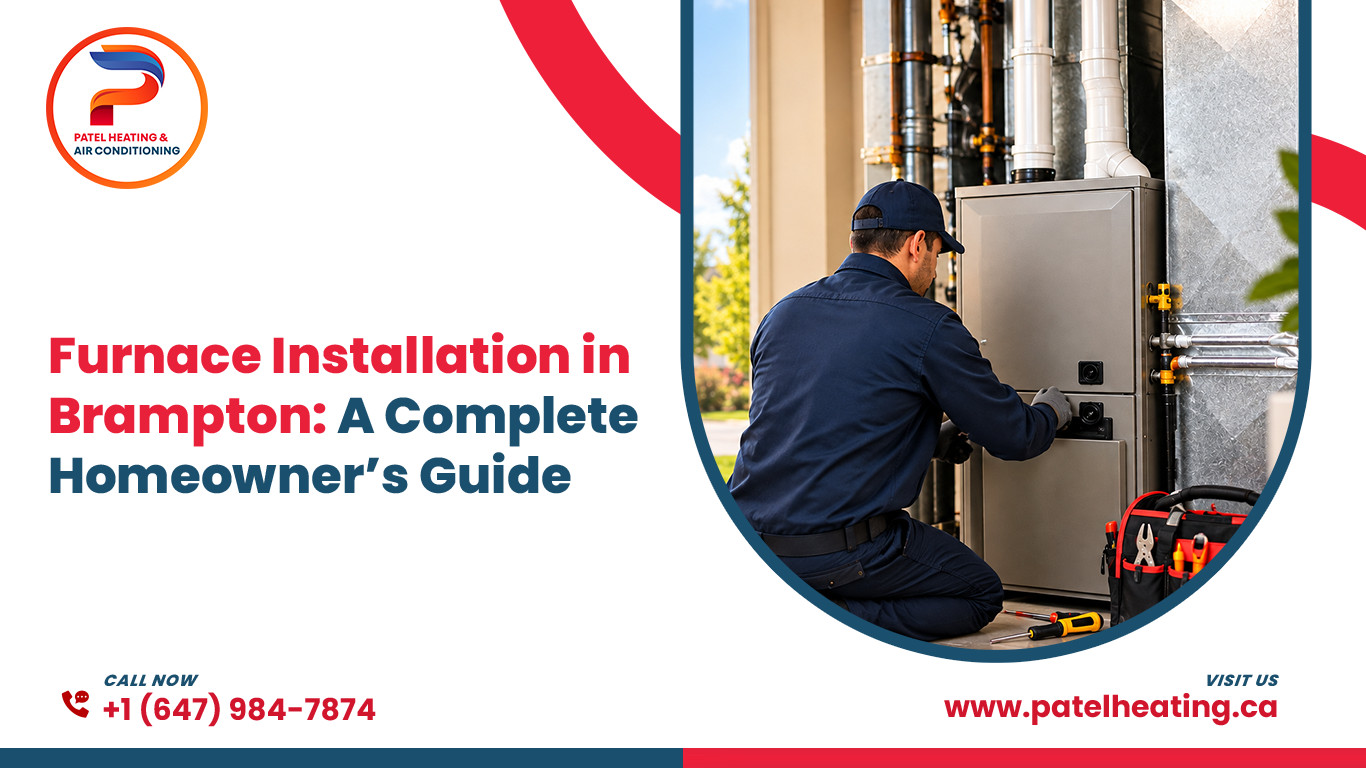
When winter arrives in Brampton, a reliable furnace is essential for keeping your home warm, comfortable, and energy-efficient. Whether your existing furnace is outdated, frequently breaking down, or no longer heating your home properly, a new furnace installation in Brampton can improve comfort and help you manage energy costs.
Choosing the right furnace involves more than simply selecting a heating unit. Proper sizing, professional installation, ventilation, efficiency, safety, and ongoing maintenance all play an important role in the performance and lifespan of your heating system.
At Patel Heating & Air Conditioning, we provide professional HVAC solutions for homeowners throughout Brampton and surrounding GTA communities. Here’s what you should know before installing a new furnace in your home.
Why Professional Furnace Installation Matters
A furnace is a major component of your home’s heating system. Even a high-efficiency furnace may not perform properly if it is incorrectly sized or installed.
Professional furnace installation helps ensure that your system is properly connected, safely ventilated, correctly configured, and operating according to manufacturer requirements and applicable safety standards.
A professional HVAC technician can also evaluate your home’s heating requirements and recommend an appropriate furnace based on factors such as:
- ● Home size and layout
- ● Insulation levels
- ● Number and size of windows
- ● Existing ductwork
- ● Home comfort requirements
- ● Existing heating infrastructure
- ● Furnace efficiency
- ● Available fuel source
Choosing the Right Furnace for Your Brampton Home
Not every furnace is suitable for every home. Selecting the right system starts with understanding your home’s heating requirements and the available fuel options.
Gas Furnaces
Natural gas furnaces are a common heating solution for many Canadian homes. They can provide powerful and consistent heat during cold winter conditions.
When installing a gas furnace, professional technicians need to consider gas connections, combustion air, venting, exhaust, electrical connections, and other safety requirements.
Electric Furnaces
Electric furnaces use electricity to generate heat and can be an option for homes without natural gas service. They may also work well with certain heating and cooling configurations.
Your HVAC professional can determine whether an electric furnace is appropriate for your home’s heating requirements and existing electrical system.
High-Efficiency Furnaces
Modern high-efficiency furnaces are designed to convert a greater portion of their fuel into usable heat. Depending on the model and installation, a high-efficiency system may help improve household energy performance.
When comparing furnaces, don’t look at efficiency alone. Consider the furnace’s capacity, operating requirements, warranty, installation quality, and compatibility with your home.
Proper Furnace Sizing Is Essential
One of the most important steps in a successful furnace installation in Brampton is selecting the correct furnace size.
A furnace that is too small may struggle to maintain your desired indoor temperature during extremely cold weather. On the other hand, an oversized furnace can cycle on and off more frequently, potentially affecting comfort and efficiency.
A professional HVAC assessment can help determine the appropriate heating capacity for your property rather than relying solely on the home’s square footage.
What Is Involved in Furnace Installation?
A professional furnace installation typically involves several steps.
1. Home and System Assessment
The technician evaluates your home’s heating requirements, existing furnace, ductwork, ventilation, gas or electrical connections, and thermostat.
2. Furnace Selection
Based on the assessment, the appropriate furnace model and heating capacity can be recommended.
3. Removal of the Existing Furnace
If you’re replacing an old system, the existing furnace is carefully disconnected and removed.
4. New Furnace Installation
The new furnace is positioned and connected to the required ductwork, electrical system, fuel supply, thermostat, and ventilation components.
5. Safety and Performance Testing
After installation, the technician checks system operation and verifies that the furnace is functioning correctly.
6. Customer Walkthrough
Your HVAC professional should explain basic operation, thermostat settings, maintenance requirements, filter replacement, and warranty information.
Furnace Installation Permits and Safety Requirements
Heating equipment must be installed according to applicable local requirements and safety standards. Depending on the installation, permits or inspections may be required.
Working with a qualified HVAC professional can help ensure that your furnace installation in Brampton is completed correctly and safely.
Safety is particularly important with gas-fired equipment. Proper combustion, ventilation, exhaust, and carbon monoxide protection should never be overlooked.
Installing a carbon monoxide detector in appropriate areas of your home is also an important safety precaution.
How Much Does Furnace Installation in Brampton Cost?
The cost of a new furnace installation can vary significantly depending on the specific home and equipment selected.
Factors that can influence the total price include:
- ● Furnace model and efficiency
- ● Furnace heating capacity
- ● Installation complexity
- ● Existing ductwork
- ● Gas or electrical modifications
- ● Venting requirements
- ● Thermostat upgrades
- ● Removal and disposal of an old furnace
- ● Required permits
- ● Additional installation materials
Instead of choosing a furnace based solely on the lowest initial price, consider the overall value, efficiency, warranty, installation quality, and expected operating requirements.
For an accurate estimate, a professional assessment of your home is recommended.
When Should You Replace Your Furnace?
If your furnace is becoming unreliable, replacement may be worth considering rather than continuing to invest in repeated repairs.
Common signs that a furnace may need replacement include:
- ● Frequent breakdowns
- ● Increasing heating bills
- ● Uneven heating throughout the home
- ● Unusual furnace noises
- ● Furnace frequently turning on and off
- ● An aging heating system
- ● Difficulty maintaining comfortable indoor temperatures
- ● Increasing repair costs
If you’re unsure whether you should repair or replace your furnace, an HVAC professional can inspect the system and explain your available options.
Furnace Maintenance After Installation
A new furnace is an investment, and regular maintenance can help keep it operating properly.
Homeowners should:
- ● Replace or clean filters according to the manufacturer’s recommendations
- ● Keep supply and return vents unobstructed
- ● Check thermostat operation
- ● Keep the furnace area clean and accessible
- ● Pay attention to unusual sounds or smells
- ● Schedule professional furnace maintenance
Regular professional maintenance can also help identify potential problems before they become major heating failures.
Improving Furnace Energy Efficiency
A new furnace is only one part of an energy-efficient home. Proper insulation, sealed ductwork, a suitable thermostat, and regular maintenance can all contribute to better heating performance.
Consider combining your new furnace with a programmable or smart thermostat to help manage indoor temperatures according to your household schedule.
Sealing air leaks and improving insulation can also reduce heat loss and help your furnace maintain comfortable indoor temperatures.
Furnace Safety Tips for Brampton Homeowners
Your furnace should always be installed and serviced by a qualified professional.
For safer operation:
- ● Never block furnace vents or air returns.
- ● Keep combustible materials away from the furnace.
- ● Replace filters regularly.
- ● Keep the furnace area accessible.
- ● Install carbon monoxide detectors where appropriate.
- ● Never attempt gas-line or combustion-system repairs yourself.
- ● Have unusual furnace noises, smells, or performance issues inspected promptly.
- ● Schedule professional maintenance before the heating season.
If you notice a suspected gas leak or carbon monoxide issue, leave the area and contact the appropriate emergency or utility service rather than attempting to diagnose the problem yourself.
Why Choose Patel Heating & Air Conditioning?
Choosing the right HVAC company is an important part of your furnace replacement or installation project.
Patel Heating & Air Conditioning provides residential heating and cooling services for homeowners in Brampton and surrounding GTA communities.
Our HVAC services include:
- ● Furnace installation
- ● Furnace replacement
- ● Furnace repair
- ● Heat pump installation
- ● Air conditioner installation and repair
- ● Tankless water Heater Installation
- ● Humidifier Installation, HRV and ERV Installation, Gas Line Services
Our goal is to provide dependable HVAC solutions with professional service, clear communication, and attention to installation quality.
Get Professional Furnace Installation in Brampton
A properly selected and professionally installed furnace can provide dependable heating and improved comfort throughout the Canadian winter. From choosing the right furnace size to completing the installation and maintaining your system, every step matters.
If you’re looking for furnace installation in Brampton, Patel Heating & Air Conditioning can help you evaluate your heating needs and find a suitable solution for your home.
Call Patel Heating & Air Conditioning today:
Phone: +1 (647) 984-7874
Email: patelheating@gmail.com
Website: www.patelheating.ca
Serving Brampton, Mississauga, Burlington, Oakville, Milton, Bolton, Georgetown, and surrounding GTA areas.
Frequently Asked Questions About Furnace Installation in Brampton
How long does furnace installation take?
The installation time depends on the furnace, existing system, ductwork, venting, and any required modifications. A professional technician can provide a more accurate timeframe after inspecting your home.
How do I know what size furnace I need?
Furnace sizing should be based on your home’s heating requirements rather than square footage alone. An HVAC professional can assess the property and recommend an appropriate heating capacity.
Should I repair or replace my old furnace?
The decision depends on the furnace’s age, condition, repair history, efficiency, and replacement cost. A professional inspection can help you compare repair and replacement options.
Do I need professional furnace installation?
Yes. Furnace installation involves electrical, ventilation, fuel, combustion, and safety considerations. Professional installation helps ensure the system is installed and tested correctly.
How often should a furnace be maintained?
Regular professional maintenance is recommended to help keep your heating system operating safely and efficiently. Your technician can recommend a maintenance schedule based on your furnace and usage.
Can a new furnace reduce my energy bills?
A modern, properly sized and installed furnace may operate more efficiently than an older system. However, actual energy savings depend on the furnace, home insulation, thermostat settings, usage, and other factors.
Leave a Reply